From the Waluhaje to Job Corps to Heritage Village: A Westside Legacy of Opportunity
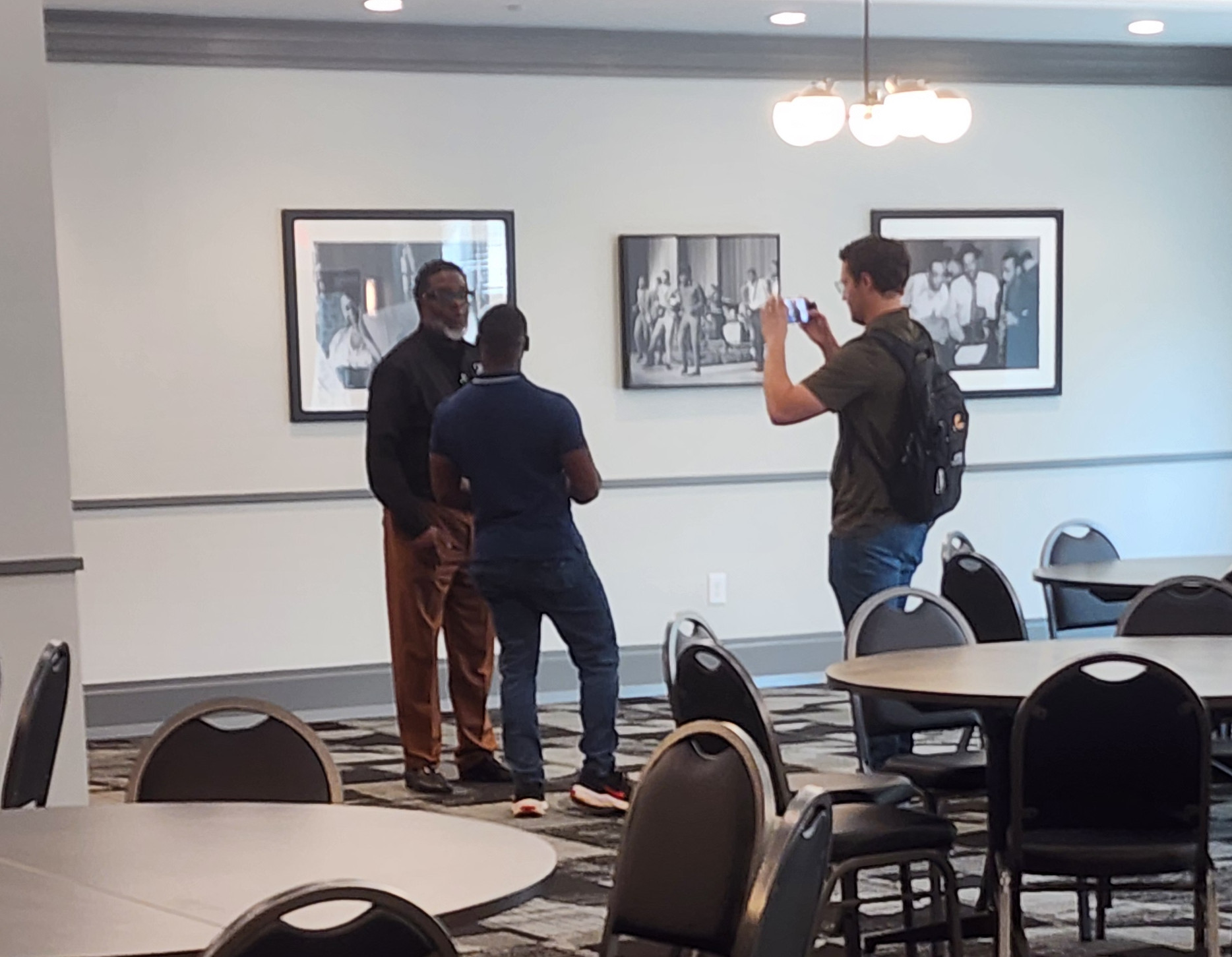
Long before the first residents move into Heritage Village @ West Lake, the building at 239 West Lake Avenue was already doing what it does best: opening doors for Black Atlantans who had too few of them.

A Landmark Reborn as a Launchpad
When developer Walter H. "Chief" Aiken opened the Waluhaje Hotel and Apartments in 1951, he built more than lodging — he built a stage. Its ground-floor ballroom hosted Duke Ellington, Ray Charles, Dizzy Gillespie, and James Brown, entertainers who could perform for Atlanta audiences but couldn't check into the city's segregated hotels. During the Jim Crow era, the Waluhaje was a rare place on the Westside where Black Atlantans could gather, celebrate, and be seen with dignity.
By the mid-1960s, Aiken's family sold the property, and in 1969 it reopened under a new mission: as the headquarters of the Atlanta Job Corps Center. For nearly five decades, until it closed its doors in 2017, the building shifted from a stage for celebration to a launching pad for careers.

What Job Corps Meant to the Westside
Job Corps was a federal residential program built to give young people — many of them from underserved communities like the surrounding Westside — a place to live, finish their education, and learn a trade. At the West Lake Avenue site, that meant local teenagers and young adults could walk into a building already steeped in Black excellence and walk out with a high school credential, hands-on vocational training, and a real shot at a stable job.
For thousands of Westside residents across two generations, the Job Corps center wasn't an abstraction — it was a neighbor. It was where a cousin learned a trade, where a friend's kid found stable housing while finishing school, where the promise of upward mobility had a street address people recognized. In a neighborhood that has weathered disinvestment and displacement pressures for decades, having a federally backed training and opportunity center rooted on West Lake Avenue meant the Westside wasn't being written out of the city's future — it was training the people who would help build it.

One Site, One Throughline
Look closely, and the Waluhaje-to-Job Corps story isn't really two stories — it's one throughline of the Westside creating opportunity where the wider city offered little. First as a hotel where Black artists and travelers could find a safe, dignified space to rest and perform. Then as a training center where young Westside residents could build a future. Now, as Heritage Village @ West Lake, the site is entering its third chapter: 102 units of affordable housing, anchored in the same commitment to giving Westside residents a foundation to build on.
That continuity is exactly what QuestCDC and its partners have pointed to in describing the site's redevelopment — a place, as Atlanta Housing President and CEO Terri M. Lee put it, that is "steeped in Atlanta's rich history of music, culture, and civil rights." Heritage Village doesn't erase that history. It carries it forward, giving the building a fourth act of service to the community that has always claimed it as its own.

The building at 239 West Lake Avenue has spent 75 years serving the Westside — as a haven for Black entertainers and travelers, as a training ground for young people building careers, and now as home for the individuals of Heritage Village @ West Lake.


